
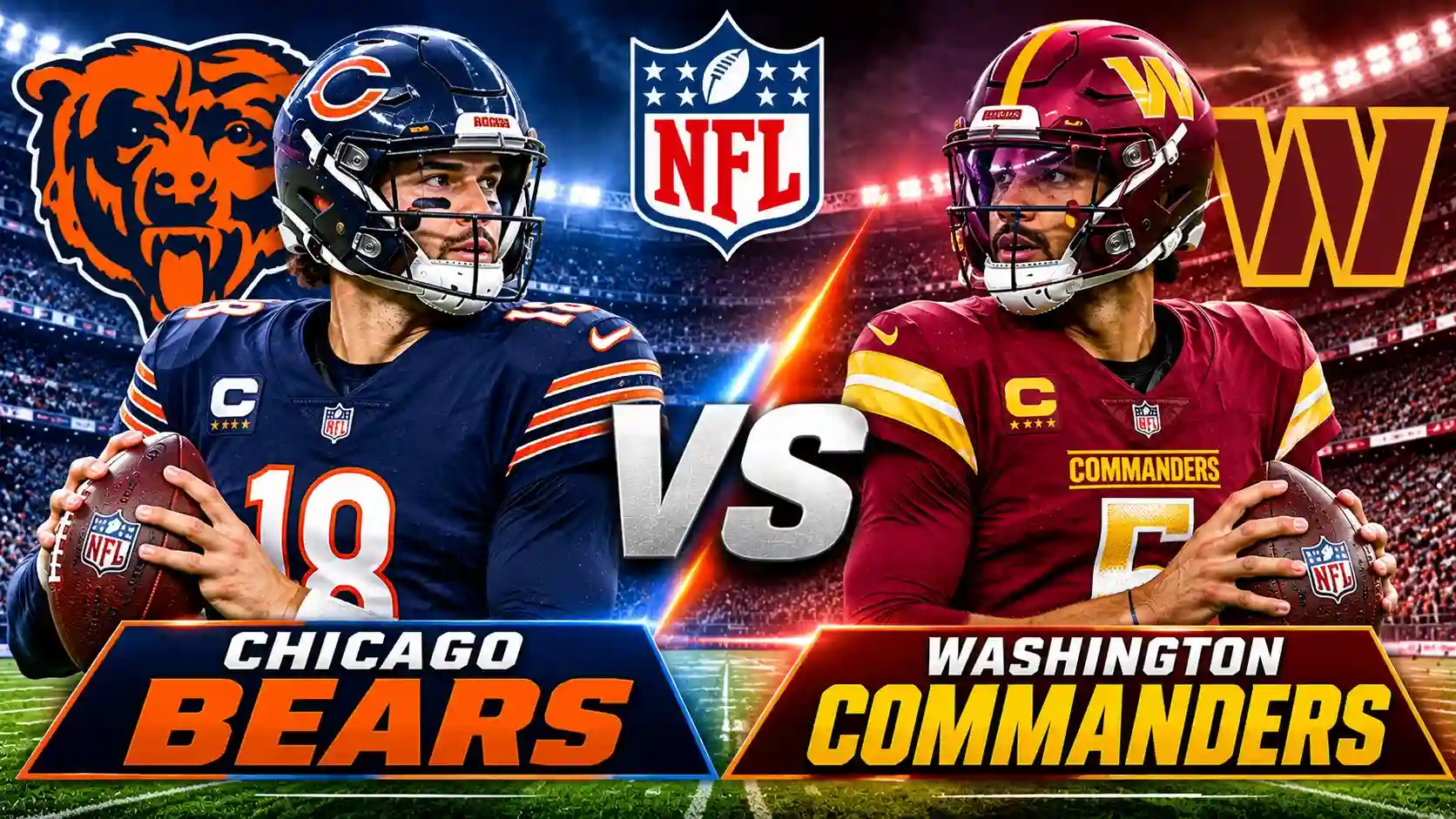
Finding clean, reliable stats for the Chicago Bears vs Washington Commanders matchup can feel like a scavenger hunt. Box scores are scattered across different sites, and historical data is often buried under layers of confusing interface design. This guide solves that problem. We have collected every meaningful number, from the all-time series record to the most recent player stat lines, into one clear, readable reference point.
A Quick Look at the Rivalry
The Chicago Bears vs Washington Commanders series is one of the older, more stubborn rivalries in the NFL. The two franchises first met in 1932, and the Commanders hold a narrow all-time lead with a record of 28-26-1, including a 3-4 postseason mark. Washington has played Chicago more than any other team in the Midwest, and the series has produced its share of memorable swings, including a seven-game Washington win streak between 2004 and 2016. The all-time head-to-head record reflects a series that has rarely been lopsided for long.
The Most Recent Matchup: A 25-24 Thriller in Washington (14 Oct 2026)
The latest chapter in the Chicago Bears vs Washington Commanders rivalry delivered a finish that felt familiar to anyone who remembers the “Fail Mary.” This time, the Bears escaped with a 25-24 win on Monday Night Football after kicker Jake Moody drilled a 38-yard field goal as time expired. The game was a back-and-forth affair defined by turnovers, red-zone struggles, and a final drive that swung on a botched handoff between Jayden Daniels and rookie running back Jacory Croskey-Merritt. Chicago’s Nahshon Wright recovered the loose ball, setting up the winning kick and giving the Bears their third straight victory. The win moved Chicago to 3-2 and sent a clear message: this version of the Bears can win ugly games on the road.
Team Totals and Efficiency Comparison
The box score shows a game where Washington moved the ball more effectively between the twenties, but Chicago won the critical efficiency battles.
| Team | Points | Total Yards | Passing Yards | Rushing Yards | First Downs | Turnovers |
|---|---|---|---|---|---|---|
| Chicago Bears | 25 | 381 | 236 | 145 | 20 | 1 |
| Washington Commanders | 24 | 329 | 205 | 124 | 22 | 3 |
Narrative Takeaway: Washington out-gained Chicago through the air and picked up more first downs, but three Commanders turnovers led directly to 10 Chicago points. The Bears turned a plus-3 turnover margin into a win, while Washington’s offense sputtered in the red zone despite moving the chains consistently.
Complete Quarterback Matchup and Passing Stats
The Chicago Bears vs Washington Commanders matchup always puts the spotlight on the quarterbacks, and the 2026 meeting was no exception.
| Quarterback | Team | Comp/Att | Passing Yards | TD | INT | Passer Rating |
|---|---|---|---|---|---|---|
| Caleb Williams | CHI | 24/32 | 236 | 1 | 0 | 104.7 |
| Jayden Daniels | WAS | 26/35 | 205 | 2 | 1 | 94.3 |
Detailed Review: Caleb Williams played a clean, efficient game. He protected the football, avoided the back-breaking interception, and delivered a key strike to D’Andre Swift on a 67-yard catch-and-run that flipped field position. Jayden Daniels produced two passing touchdowns and kept Washington’s offense on schedule, but his late fumble in the handoff exchange proved to be the game’s defining mistake. In a game decided by one point, Williams’ zero turnovers were the difference.
Rushing Leaders and Ground Game Performance
The ground game was a story of two very different approaches. Chicago leaned on Swift, while Washington spread carries across its backfield.
| Player | Team | Carries | Rushing Yards | Avg | Long | TD |
|---|---|---|---|---|---|---|
| D’Andre Swift | CHI | 14 | 108 | 7.7 | 19 | 0 |
| Roschon Johnson | CHI | 5 | 19 | 3.8 | 7 | 1 |
| Jacory Croskey-Merritt | WAS | 17 | 61 | 3.6 | 11 | 0 |
| Jayden Daniels | WAS | 10 | 52 | 5.2 | 18 | 0 |
Explosive Runs: Swift’s 19-yard burst was the longest run of the game, and his 7.7 yards-per-carry average kept Chicago ahead of the chains. Washington’s rookie back, Croskey-Merritt, handled a heavy workload but averaged just 3.6 yards per attempt against a Bears run defense that entered the week ranked 31st in the league. The Commanders’ inability to generate explosive runs on early downs forced Daniels to carry more of the rushing load than the coaching staff would have preferred.
Receiving Production and Target Breakdown
The passing game featured a mix of possession chains and one massive explosive play.
| Player | Team | Targets | Receptions | Yards | YAC | Red-Zone Targets |
|---|---|---|---|---|---|---|
| D’Andre Swift | CHI | 2 | 2 | 67 | 48 | 0 |
| Cole Kmet | CHI | 4 | 4 | 51 | 12 | 1 |
| Terry McLaurin | WAS | 9 | 6 | 78 | 21 | 2 |
| Zach Ertz | WAS | 5 | 3 | 42 | 8 | 1 |
Narrative Review: Swift’s 67 receiving yards on just two catches accounted for over 28 percent of Chicago’s passing output. His 48 yards after catch turned a simple check-down into a field-flipper. For Washington, Terry McLaurin remained the focal point, drawing nine targets and converting six for 78 yards. However, the Commanders’ red-zone offense stalled repeatedly, settling for field goals on two early trips inside the Chicago 20.
Defensive Plays, Turnovers, and Sacks
The Chicago Bears vs Washington Commanders game turned on three defensive plays that decided the final score.
| Defensive Metric | Chicago Bears | Washington Commanders |
|---|---|---|
| Sacks | 3 | 3 |
| Tackles for Loss | 5 | 4 |
| Interceptions | 1 | 0 |
| Fumble Recoveries | 2 | 1 |
| Total Takeaways | 3 | 1 |
Key Stops: Jaquan Brisker intercepted Daniels at the Washington 2-yard line on the Commanders’ opening possession, leading to a Chicago field goal. Montez Sweat forced a fumble on Washington’s second drive, which set up a 1-yard Williams touchdown run. The most critical takeaway came late: Nahshon Wright’s recovery of the botched handoff gave Chicago the ball with a chance to win, and Moody did the rest. Washington’s defense generated three sacks of its own but could not force a turnover when it mattered most.
Step-by-Step Game-Changing Moments
- First Quarter (CHI 3, WAS 0): Brisker’s interception at the 2-yard line stops a Washington scoring threat and flips momentum.
- Second Quarter (CHI 10, WAS 7): Sweat’s forced fumble leads to a Williams rushing touchdown, giving Chicago its first lead.
- Third Quarter (WAS 17, CHI 16): Daniels connects on a touchdown pass to reclaim the lead for Washington.
- Fourth Quarter (CHI 25, WAS 24): Wright recovers the botched handoff with under two minutes left, and Moody kicks the game-winning 38-yard field goal as time expires.
What the Numbers Tell Us About Each Team
For Chicago, the numbers reveal a team learning to win in different ways. The Bears did not dominate the stat sheet, but they protected the football (plus-3 turnover margin) and leaned on Swift’s efficiency when the passing game needed a spark. For Washington, the data paints a frustrating picture: Daniels moved the offense effectively between the twenties, McLaurin produced, and the ground game showed flashes, but three turnovers and red-zone stagnation erased the advantage. The Commanders out-gained Chicago and still lost, a sign of a team that has not yet learned to close.
Looking Back: How the Rivalry Has Unfolded Over Time
The all-time Chicago Bears vs Washington Commanders series has produced several defining stretches. Washington’s seven-game win streak from 2004 to 2016 represented the longest run of dominance in the rivalry. The Bears answered with a run of their own in the late 2010s and early 2020s, including a 40-20 blowout in 2023. The 2024 meeting produced the infamous “Fail Mary,” a 52-yard Hail Mary from Daniels to Noah Brown that gave Washington an 18-15 win and sent Chicago into a 10-game spiral. The 2026 game was the Bears’ response—a reminder that in this series, the script rarely follows expectations.
Why Player Stats Matter in This Matchup
Individual numbers explain why this rivalry stays so competitive. When Caleb Williams avoids turnovers, Chicago wins. When Jayden Daniels protects the football, Washington controls games. The Swift-McLaurin comparison shows two offenses built around different engines: Chicago’s backfield efficiency versus Washington’s receiver-driven chain movement. The Chicago Bears vs Washington Commanders matchup rewards the team that wins the efficiency battle, not the volume battle. The 2026 game is the latest proof.
Final Thoughts and Fan Community Takeaways
This rivalry is not defined by blowouts. It is defined by one-score games, late mistakes, and unlikely heroes. The Bears’ 25-24 win in October 2026 added another chapter to a series that refuses to produce a boring afternoon. For Chicago fans, the takeaway is simple: this team can win when the offense is not perfect. For Washington fans, the message is equally clear: the talent is there, but the turnovers must stop. The next meeting will likely follow the same script—close, chaotic, and decided by the team that blinks last.