
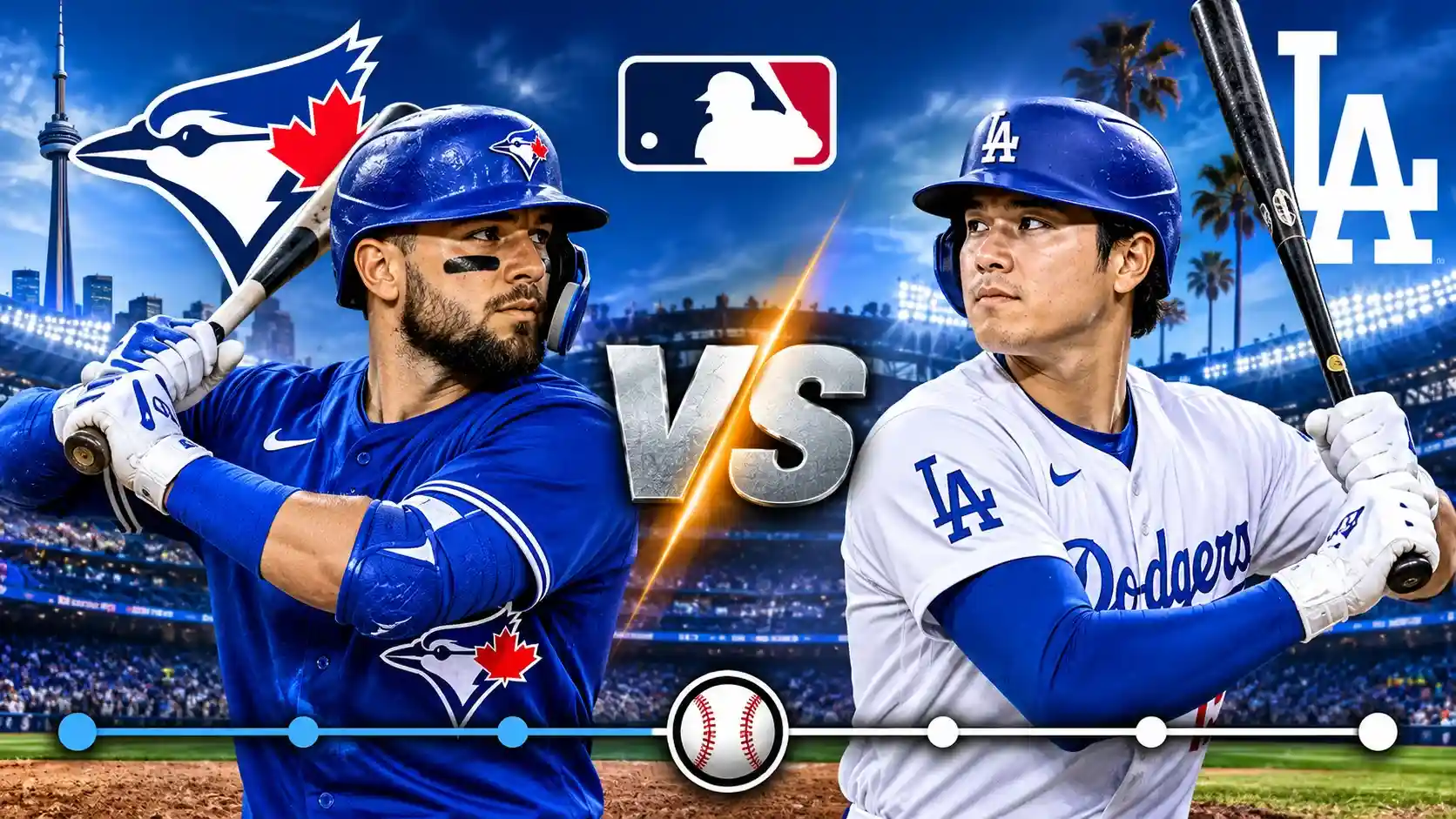
Finding clean, trustworthy numbers for a Toronto Blue Jays vs Dodgers matchup shouldn’t feel like a scavenger hunt. Box scores scatter across different sites, postseason data hides behind paywalls, and outdated head-to-head records confuse the picture. This guide solves that problem. It pulls the full Toronto Blue Jays vs Dodgers timeline into one place—regular-season history, the 2025 World Series clash, and the 2026 rematch—so you can compare stats without jumping between ten tabs.
A Quick Look at the Rivalry
The Toronto Blue Jays vs Dodgers timeline starts later than most fans expect. These franchises did not meet until June 18, 2002, when Roy Halladay threw a complete game in a 2–1 Blue Jays win at Dodger Stadium. Since then, the Dodgers have controlled the regular-season series with a 19–11 edge.
The rivalry changed forever in October 2025. The two clubs met in the World Series for the first time, and Los Angeles won a seven-game classic that ended in extra innings. That series turned a limited interleague history into a genuine championship storyline.
All-Time Head-to-Head Snapshot
| Category | Dodgers | Blue Jays |
|---|---|---|
| Regular-season wins (2002–2025) | 19 | 11 |
| Postseason series wins | 1 (2025 World Series) | 0 |
| World Series titles (franchise history) | 8 | 2 |
| First meeting | June 18, 2002 (TOR won, 2–1) | — |
The regular-season gap looks wide, but the postseason sample is tiny. One seven-game series now defines the Toronto Blue Jays vs Dodgers timeline more than two decades of scattered interleague play.
The Most Recent Matchup: The 2026 World Series Rematch
The 2026 season brought the rivalry back to Toronto for a three-game series in April, billed as the first meeting since Game 7 of the 2025 Fall Classic. The Dodgers arrived hot, and the Blue Jays were slumping. The result was a tense, playoff-style series in the middle of April.
Game-by-Game Results
| Date | Game | Winner | Score |
|---|---|---|---|
| April 6, 2026 | Game 1 | Dodgers | 14–2 |
| April 7, 2026 | Game 2 | Dodgers | 4–1 |
| April 8, 2026 | Game 3 | Blue Jays | 4–3 |
Los Angeles flexed its power in the opener, hitting five home runs in a 14–2 rout. The Dodgers took the middle game behind another strong pitching performance, then Toronto salvaged the finale on a late error and a 4–3 comeback. The series added a fresh chapter to the Toronto Blue Jays vs Dodgers timeline and proved that even a regular-season rematch carries October weight.
Team Totals and Efficiency Comparison
Raw runs tell only part of the story. The table below compares how both clubs produced offense across the 2026 three-game rematch, using per-game averages to keep the sample balanced.
| Metric (2026 series avg.) | Dodgers | Blue Jays |
|---|---|---|
| Runs per game | 7.0 | 2.3 |
| Hits per game | 10.3 | 6.3 |
| Home runs per game | 1.7 | 0.0 |
| Strikeouts per game (offense) | 7.3 | 7.0 |
| Walks per game (offense) | 2.7 | 3.7 |
The Dodgers turned extra-base power into separation. Toronto drew more walks but could not convert traffic into runs, especially in the first two games. That efficiency gap explains why a three-game series felt less close than the final scores of Games 2 and 3 suggest.
Starting Pitcher Matchup and Pitching Stats
The 2026 series offered a marquee pitching storyline. Max Scherzer started the opener for Toronto, while Shohei Ohtani took the mound for Los Angeles in the finale. The table below isolates the starting pitchers’ lines from their respective starts in the series.
| Pitcher | Team | IP | H | R | ER | BB | SO | Decision |
|---|---|---|---|---|---|---|---|---|
| Max Scherzer | TOR | 2.0 | 2 | 2 | 2 | 1 | 2 | L (1–1) |
| Justin Wrobleski | LAD | 5.0 | 2 | 1 | 1 | 0 | 0* | W (1–0) |
| Shohei Ohtani | LAD | 6.0 | 4 | 1 | 0 | 1 | 2 | ND |
*Wrobleski’s exact strikeout total was not listed in the game summary; his line reflects the reported innings and run suppression.
Scherzer’s early exit forced Toronto’s bullpen into long duty. Ohtani, by contrast, gave Los Angeles six innings of unearned-run ball in the finale. The starting-pitching gap is a recurring theme in any Toronto Blue Jays vs Dodgers timeline, and the 2026 series reinforced it.
Run Producers and Extra-Base Hit Leaders
Power decides matchups. In the 2026 rematch, Dalton Rushing announced himself with two solo home runs in the opener—his first career multi-homer game. Teoscar Hernández and Freddie Freeman each added two-run shots, while Ohtani chipped in a solo blast.
| Player (2026 series) | Team | HR | RBI | Extra-base hits (series) |
|---|---|---|---|---|
| Dalton Rushing | LAD | 2 | 2 | 3 (2 HR, 1 2B) |
| Teoscar Hernández | LAD | 1 | 4 | 2 |
| Freddie Freeman | LAD | 1 | 3 | 2 |
| George Springer | TOR | 0 | 1 | 1 (2B) |
| Daulton Varsho | TOR | 0 | 1 | 1 (1B) |
Toronto’s extra-base production came mostly in the finale, when Springer and Jesús Sánchez each doubled. The Dodgers, however, owned the power edge across all three games, and that margin shows up clearly in the Toronto Blue Jays vs Dodgers timeline for 2026.
Clutch Hitting and RBI Breakdown
Clutch at-bats separate good teams from great ones. The Dodgers went 8-for-23 (.348) with runners in scoring position during the first two games of the 2026 series, while Toronto managed just 2-for-15 (.133) in the same spots. The finale flipped the script: Toronto scratched across two late runs on an error and a stolen base.
| Situational split (2026 series) | Dodgers | Blue Jays |
|---|---|---|
| RISP average (Games 1–2) | .348 | .133 |
| Late-inning runs (7th–9th) | 6 | 3 |
| Sacrifice flies | 2 | 0 |
The Blue Jays’ final-game win showed they can win without a big hit. But over a full Toronto Blue Jays vs Dodgers timeline, the team that converts scoring chances more often usually controls the series.
Pitching and Defense: Strikeouts, Double Plays, and Key Stops
Defense rarely makes highlight reels, but it decides series. Toronto turned two double plays in the finale and stole a crucial base that led to the go-ahead run. Los Angeles, meanwhile, leaned on its bullpen to protect leads in Games 1 and 2.
| Defensive metric (2026 series) | Dodgers | Blue Jays |
|---|---|---|
| Errors | 1 (costly, Game 3) | 0 |
| Double plays turned | 1 | 3 |
| Stolen bases allowed | 1 | 0 |
The Dodgers’ lone error in the finale directly produced the winning run for Toronto. Clean defense kept the Blue Jays alive in a series where their offense struggled. That contrast is a useful reminder: the Toronto Blue Jays vs Dodgers timeline is not only about home runs.
Step-by-Step Game-Changing Moments
- First inning, Game 1: Teoscar Hernández homers off Scherzer, setting an early tone.
- Third inning, Game 1: Freddie Freeman drills a 438-foot two-run shot, pushing the lead to 5–0.
- Sixth inning, Game 1: Shohei Ohtani goes deep, his third homer in four games, making it 10–2.
- Eighth inning, Game 3: Davis Schneider scores on a Will Smith throwing error, giving Toronto a 4–3 lead it would not surrender.
- Ninth inning, Game 3: Jeff Hoffman works around a single and a walk to close the door.
Those five moments capture the emotional swing of the 2026 rematch. They also show how quickly a Toronto Blue Jays vs Dodgers timeline can shift from a blowout to a one-run finish.
What the Numbers Tell Us About Each Team
The 2026 series exposed two different identities. Los Angeles wins with power and starting pitching. The Dodgers hit five home runs in the opener and received five innings of one-run ball from a spot starter. Toronto wins with pitching depth, defense, and timely small-ball execution, as shown in the finale.
Over a longer Toronto Blue Jays vs Dodgers timeline, the Dodgers’ formula has produced more consistent regular-season success. But the Blue Jays’ finale win proves they can compete when their pitchers keep the game close. The gap is narrower than the 19–11 regular-season record suggests.
Looking Back: How the Rivalry Has Unfolded Over Time
The rivalry’s first chapter was a pitcher’s duel: Roy Halladay outlasting the Dodgers in 2002. For the next two decades, the teams met sporadically, with Los Angeles winning most of the interleague matchups.
Then came 2025. The Blue Jays reached their first World Series since 1993, and the Dodgers were waiting. Los Angeles won in seven games, capturing back-to-back championships and etching the defining entry into the Toronto Blue Jays vs Dodgers timeline. The 2026 rematch added a regular-season sequel, but the World Series remains the emotional core of this rivalry.
Why Player Stats Matter in This Matchup
Stats explain why the 2025 World Series and the 2026 rematch followed similar patterns. When the Dodgers hit home runs and get length from their starters, they control the game. When Toronto’s pitchers limit damage and its defense converts double plays, the Blue Jays stay within striking distance.
For fans building their own Toronto Blue Jays vs Dodgers timeline, the numbers provide a clear lens: track starting-pitcher innings, RISP conversion, and extra-base hits. Those three categories tell you more about the likely winner than raw hit totals.
Final Thoughts and Fan Community Takeaways
The Toronto Blue Jays vs Dodgers timeline is young but already loaded with meaning. A 19–11 regular-season edge for Los Angeles, a seven-game World Series classic in 2025, and a tense 2026 rematch give fans plenty to debate.
If you’re a Blue Jays fan, the finale win offers a blueprint: pitch, defend, and capitalize on mistakes. If you’re a Dodgers fan, the first two games show why power and starting depth still rule. Either way, this rivalry is no longer a footnote. It’s a championship-level matchup with a growing history, and the next chapter will only add to the Toronto Blue Jays vs Dodgers timeline.