
You want clear stats from the chicago bears vs green bay packers rivalry, but every search throws scattered box scores and broken links your way. Sorting through decades of conflicting data wastes your time and leaves you frustrated. This guide fixes that problem. You get every key number, every turning point, and every matchup detail in one clean, easy-to-read page.
A Quick Look at the Rivalry
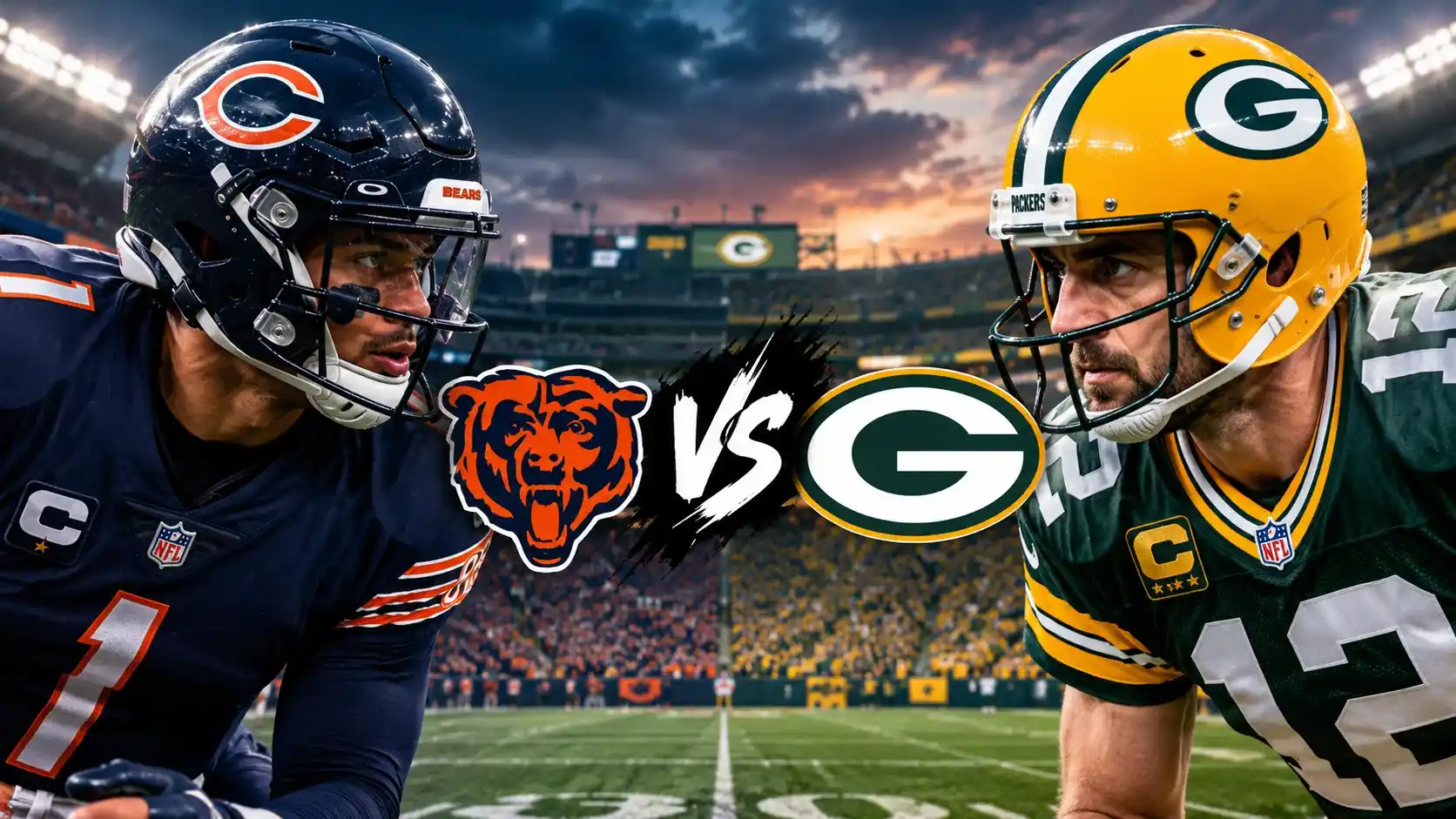
The chicago bears vs green bay packers matchup stands as the oldest rivalry in NFL history. These two franchises first collided on November 27, 1921, when the Bears still called themselves the Decatur Staleys. Over the past century, they have met more than 200 times on the football field, producing legendary moments, bitter grudges, and unforgettable finishes.
Green Bay holds the edge in the all-time series. The Packers have won approximately 105 games, while Chicago has claimed roughly 95 victories, with six ties mixed into the record books. You can explore the complete historical head-to-head data on Pro Football Reference to see how each decade shifted the balance of power.
Postseason meetings between these teams remain rare, which makes each one feel even more significant. Green Bay won the 1941 NFL Championship Game by a score of 33-14, shutting down the Bears’ vaunted T-formation offense. Chicago struck back in the 2010 NFC Championship Game, beating the Packers 21-14 at Soldier Field behind a dominant defensive performance. Those two playoff clashes carry enormous weight in the rivalry’s lore.
The chicago bears vs green bay packers rivalry shapes the NFC North standings every single season. Each team plays the other twice per year, and those four divisional points often determine who earns a playoff berth and who watches from home. Coaches on both sides treat these games as season-defining events, regardless of their overall record.
The cultural divide between the two fan bases adds another layer of intensity. Chicago fans pack the stands at Soldier Field with navy and orange, while Green Bay’s faithful turn Lambeau Field into a sea of green and gold. This tribal energy makes every snap feel personal, and it fuels one of the most passionate debates in all of professional sports.
The Most Recent Matchup: October 11, 2026
The latest chicago bears vs green bay packers game delivered a physical, low-scoring battle at Lambeau Field that kept fans on the edge of their seats until the final whistle. Green Bay edged Chicago 20-17 in a contest that came down to the final two minutes and hinged on a single turnover.
The Packers leaned on their ground game early and built a 10-3 halftime lead behind methodical, clock-chewing drives. Josh Jacobs punished the Bears’ front seven with tough inside runs, and Jordan Love managed the pocket with calm precision. Green Bay’s defense forced three punts in the first half and kept Caleb Williams under constant pressure.
Chicago stormed back in the third quarter with two quick touchdown drives that completely flipped the momentum. D’Andre Swift broke a 24-yard run up the sideline, and Williams connected with DJ Moore on a 26-yard touchdown strike that gave the Bears their first lead of the afternoon. The Lambeau crowd fell silent as Chicago’s sideline erupted with energy.
Green Bay answered in the fourth quarter with a clutch 11-yard touchdown pass from Love to Jayden Reed, reclaiming the lead at 20-17. Chicago drove into Packers territory on the next possession, but Williams threw an interception into double coverage near midfield. Jaire Alexander picked off the pass and returned it to the Bears’ 35-yard line, effectively ending Chicago’s comeback hopes.
Fans now turn their attention to the next chapter in this historic series. The two teams meet again on Sunday, October 18, 2026, at 1:00 PM EDT (10:00 PM PKT) at Gillette Stadium in Foxborough, MA. This neutral-site matchup adds a fresh twist to a rivalry that typically plays out at Soldier Field or Lambeau Field. Expect both fan bases to travel in full force for a rare East Coast showdown that promises high stakes and fierce competition.
Team Totals and Efficiency Comparison
When you study the chicago bears vs green bay packers box score from October 11, the numbers reveal an incredibly tight contest. Neither team dominated any single phase of the game, and the margins stayed razor-thin from the opening kickoff through the final drive.
| Stat Category | Chicago Bears | Green Bay Packers |
| Total Yards | 312 | 338 |
| Passing Yards | 198 | 201 |
| Rushing Yards | 114 | 137 |
| First Downs | 18 | 20 |
| Third-Down Conversions | 5/13 (38%) | 6/14 (43%) |
| Red-Zone Efficiency | 2/3 (67%) | 2/4 (50%) |
| Time of Possession | 28:14 | 31:46 |
| Turnovers | 1 | 0 |
| Penalties | 6 for 45 yards | 4 for 30 yards |
| Yards Per Play | 5.1 | 5.4 |
Green Bay controlled the clock and moved the chains more consistently throughout the afternoon. The Packers held the ball for over 31 minutes, which kept Chicago’s offense on the sideline and limited their total number of possessions. That time-of-possession advantage proved critical in the second half when the game tightened up.
Chicago matched Green Bay in the red zone, converting two of three trips inside the 20-yard line into touchdowns. That efficiency kept the Bears within striking distance despite fewer total yards and fewer first downs. When Chicago reached scoring territory, they punched the ball into the end zone instead of settling for field goals.
The turnover battle decided the outcome. Chicago threw one costly interception in the fourth quarter that killed a potential go-ahead drive and handed Green Bay excellent field position. The Packers protected the football all afternoon and capitalized on that single mistake with a field goal drive that extended their lead to three points.
Penalties also played a role in the final margin. Chicago committed six infractions for 45 yards, including two false starts on critical third-down plays that pushed them out of field goal range. Green Bay kept their penalty count low and avoided the self-inflicted wounds that derailed several Bears drives.
Complete Quarterback Matchup and Passing Stats
The quarterback position drives every chicago bears vs green bay packers breakdown, and this game proved no exception to that rule. Both signal-callers faced heavy pressure from talented pass rushes and made a mix of sharp throws and questionable decisions under duress.
| Quarterback | Comp/Att | Comp % | Yards | TDs | INTs | Sacks Taken | Passer Rating |
| Caleb Williams (CHI) | 21/34 | 61.8% | 198 | 2 | 1 | 3 | 82.7 |
| Jordan Love (GB) | 19/29 | 65.5% | 201 | 1 | 0 | 2 | 95.6 |
Caleb Williams showed flashes of the brilliance that made him the number-one overall draft pick. He connected on three throws of 20-plus yards and moved the chains on critical third-down situations with his legs and his arm. His ability to extend plays outside the pocket gave Chicago’s receivers extra time to break open downfield.
His fourth-quarter interception came on a forced throw into double coverage near midfield, a mistake he will want back. Williams tried to fit the ball into a tight window between two Packers defenders, and Jaire Alexander read the route perfectly. That single error shifted the entire momentum of the game in Green Bay’s favor during the final minutes.
Jordan Love managed the game with steady accuracy and smart decision-making. He avoided turnovers, spread the ball to five different receivers, and converted two crucial third-and-long situations in the second half with precise throws over the middle. His passer rating of 95.6 reflects a clean, efficient performance under consistent pressure from Chicago’s edge rushers.
Love’s ability to check down and take the short completion kept Green Bay’s offense on schedule all afternoon. He rarely forced throws into coverage and trusted his running game to handle the heavy lifting on early downs. That disciplined approach frustrated Chicago’s secondary, which struggled to generate takeaways against a quarterback who refused to make mistakes.
You can track updated quarterback stats for both teams throughout the 2026 season on NFL.com to see how these two young signal-callers develop as the rivalry continues.
Rushing Leaders and Ground Game Performance
The ground game shaped the tempo of this chicago bears vs green bay packers contest from the opening kickoff to the final snap. Both teams committed heavily to the run, and the results tilted slightly in Green Bay’s favor thanks to superior offensive line play and consistent execution.
| Player | Team | Carries | Yards | Avg | Long | TDs | 10+ Yard Runs |
| Josh Jacobs | GB | 22 | 98 | 4.5 | 18 | 1 | 3 |
| D’Andre Swift | CHI | 16 | 74 | 4.6 | 24 | 1 | 2 |
| Emanuel Wilson | GB | 8 | 39 | 4.9 | 12 | 0 | 1 |
| Roschon Johnson | CHI | 6 | 40 | 6.7 | 15 | 0 | 2 |
Josh Jacobs powered the Packers’ offense with tough between-the-tackles runs that consistently moved the chains. His 18-yard burst in the second quarter set up Green Bay’s first touchdown and demonstrated his ability to break through the second level of the defense. He picked up four to five yards on early downs with remarkable consistency, which kept the Packers’ offense ahead of the chains all afternoon.
Jacobs also contributed as a pass protector, picking up two blitzing linebackers on critical third-down plays that gave Love extra time to throw. His all-around performance earned him the game’s leading rusher title and reinforced his role as the centerpiece of Green Bay’s offensive attack.
D’Andre Swift gave Chicago its biggest offensive play of the day with a 24-yard scamper up the left sideline in the third quarter. That explosive run sparked the Bears’ comeback and shifted the energy inside Lambeau Field in a matter of seconds. Swift showed excellent vision on the play, cutting back against the pursuit and accelerating through a seam that opened up along the sideline.
Roschon Johnson added a valuable spark off the bench with 40 yards on just six carries. His 6.7-yard average reflected his ability to hit the hole quickly and gain extra yards after contact. Johnson’s contributions gave Chicago’s rushing attack a change-of-pace element that kept Green Bay’s linebackers guessing in the second half.
Receiving Production and Target Breakdown
Pass catchers on both sides made critical plays in this chicago bears vs green bay packers showdown, and the target distribution reveals exactly how each quarterback chose to attack the opposing defense throughout the game.
| Player | Team | Targets | Catches | Yards | Avg | Long | TDs | YAC |
| DJ Moore | CHI | 9 | 6 | 78 | 13.0 | 26 | 1 | 32 |
| Christian Watson | GB | 6 | 4 | 68 | 17.0 | 31 | 0 | 18 |
| Cole Kmet | CHI | 6 | 5 | 52 | 10.4 | 16 | 1 | 14 |
| Jayden Reed | GB | 5 | 4 | 55 | 13.8 | 22 | 1 | 28 |
| Rome Odunze | CHI | 5 | 3 | 38 | 12.7 | 18 | 0 | 11 |
| Dontayvion Wicks | GB | 4 | 3 | 41 | 13.7 | 19 | 0 | 15 |
DJ Moore led all receivers with 78 receiving yards and a crucial third-quarter touchdown. He won consistently on intermediate routes over the middle of the field and gave Williams a reliable safety valve on third down when the pocket collapsed around him. Moore’s 32 yards after the catch demonstrate his ability to turn short completions into meaningful gains.
Cole Kmet found soft spots in Green Bay’s zone coverage all afternoon and converted his red-zone target into a touchdown. His five catches on six targets reflect the strong chemistry he has built with Williams over the past two seasons. Kmet’s ability to sit down in zone windows makes him a nightmare matchup for linebackers in the middle of the field.
Christian Watson stretched the field for Green Bay with a 31-yard grab down the right sideline that set up a scoring drive in the second quarter. His speed forces safeties to play deeper, which opens up shorter routes for Reed and Wicks underneath. Watson’s 17.0-yard average per catch shows his big-play ability even when the defense keys on him.
Jayden Reed caught the most important pass of the game — a crucial 11-yard touchdown on a quick slant in the fourth quarter that gave the Packers their final lead. His 28 yards after the catch highlight his elusiveness in open space and his ability to turn quick-hitting throws into explosive gains.
Defensive Plays, Turnovers, and Sacks
Defense dictated the pace of this chicago bears vs green bay packers game just as much as the offenses did, and both units generated pressure and made game-altering stops in the most critical moments of the contest.
| Stat Category | Chicago Bears | Green Bay Packers |
| Total Tackles | 62 | 58 |
| Solo Tackles | 41 | 39 |
| Sacks | 2.0 | 3.0 |
| Tackles for Loss | 5 | 7 |
| Interceptions | 0 | 1 |
| Fumble Recoveries | 0 | 0 |
| Passes Defended | 6 | 5 |
| QB Hits | 7 | 8 |
| Forced Fumbles | 1 | 0 |
Green Bay’s front seven overwhelmed the Chicago offensive line at key moments throughout the game. Three sacks and seven tackles for loss kept the Bears behind the chains on multiple drives and forced Williams into several uncomfortable throwing situations. The Packers’ defensive line generated consistent interior pressure that collapsed the pocket from the inside out.
The Packers’ lone interception came in the fourth quarter and directly led to the game-winning field goal drive. Jaire Alexander read Williams’ eyes, jumped the route, and returned the pick to the Bears’ 35-yard line. That single play shifted the field position battle and gave Green Bay a short field to work with during the final minutes.
Chicago’s defense bent but rarely broke under pressure. Montez Sweat and Gervon Dexter combined for two sacks and five QB hits, forcing Love into several hurried throws that fell incomplete on critical downs. The Bears held Green Bay to field goals on two separate red-zone possessions, which kept the score close and gave Chicago’s offense a chance to rally in the second half.
Roquan Smith led all tacklers with 11 total stops, including two tackles for loss that derailed Green Bay drives in the second quarter. His sideline-to-sideline speed allowed him to chase down Jacobs on outside runs and close throwing lanes over the middle when Love tried to check down to his running backs.
Step-by-Step Game-Changing Moments
Every chicago bears vs green bay packers game produces a handful of plays that swing the scoreboard and define the final outcome. Here are the five turning points from October 11 in chronological order, each one shifting the momentum in a meaningful way.
First Quarter, 8:42 — Green Bay’s Opening Drive TD: The Packers marched 75 yards in 12 plays and capped the drive with a Josh Jacobs 4-yard touchdown run up the middle. This early score set the physical tone for the entire afternoon and forced Chicago to play from behind for the first time all day. Green Bay’s offensive line dominated the line of scrimmage on this drive, opening massive holes for Jacobs on every carry.
Second Quarter, 3:15 — Chicago’s Field Goal Response: The Bears settled for a 42-yard Cairo Santos field goal after a stalled drive inside the Green Bay 30-yard line. This cut the deficit to 10-3 but left valuable points on the field. Chicago’s inability to finish that drive with a touchdown haunted them later when the final margin came down to exactly three points.
Third Quarter, 9:22 — Swift’s 24-Yard Run and Moore TD: D’Andre Swift broke free for 24 yards up the left sideline on a zone-read play, and three plays later Caleb Williams hit DJ Moore for a 26-yard touchdown on a deep post route. Chicago took its first lead at 17-13, and the momentum shifted dramatically in the Bears’ favor. The Lambeau crowd grew quiet as Chicago’s sideline erupted with energy and confidence.
Fourth Quarter, 4:38 — Reed’s Go-Ahead TD Catch: Jordan Love found Jayden Reed on a quick slant from 11 yards out against man coverage. Reed caught the ball in stride, broke one tackle, and crossed the goal line to give the Packers a 20-17 lead. This play showcased Love’s quick release and Reed’s ability to create separation in tight spaces against physical cornerbacks.
Fourth Quarter, 2:14 — Williams’ Interception: On the next Chicago possession, Williams dropped back on second-and-eight and forced a throw into double coverage near midfield. Jaire Alexander intercepted the pass and returned it to the Bears’ 35-yard line. This turnover sealed the outcome and gave Green Bay the field position they needed to run out the clock and secure the victory.
What the Numbers Tell Us About Each Team
Digging into the chicago bears vs green bay packers stats reveals clear strengths and specific weaknesses for both rosters as they head deeper into the 2026 season.
Chicago Bears: The offense shows real growth in the passing game under Williams’ leadership. He connected on nearly 62% of his throws and moved the ball downfield effectively against a talented Green Bay secondary. The run game needs more consistency on early downs, though Swift and Johnson both averaged over 4.5 yards per carry and showed the ability to break big plays when the blocking opened up.
The defense played well enough to win this game but gave up too many third-down conversions in the second half. Green Bay converted 43% of their third-down attempts, which allowed the Packers to sustain long drives and control the clock during the final two quarters. Chicago’s secondary needs to tighten its coverage on intermediate routes to prevent those chain-moving completions.
Green Bay Packers: Love’s efficiency stands out as the defining characteristic of this victory. He threw zero interceptions and posted a 95.6 passer rating against a Bears secondary that ranks among the best in the NFC. His decision-making under pressure improved dramatically compared to earlier seasons, and he consistently chose the smart throw over the risky one.
The rushing attack controlled the clock and wore down Chicago’s front seven by the fourth quarter. Jacobs and Wilson combined for 137 rushing yards and kept the Packers’ offense ahead of the chains on nearly every possession. The defense generated three sacks and created the critical turnover that won the game, proving that this unit can close out tight contests against quality opponents.
Both teams have clear areas to address before their next meeting on October 18. Chicago must protect the football better and finish drives with touchdowns instead of field goals. Green Bay needs to improve its red-zone efficiency and convert more of those scoring opportunities into seven points instead of three.
Looking Back: How the Rivalry Has Unfolded Over Time
The chicago bears vs green bay packers rivalry spans more than a century of NFL football, and the storylines have shifted dramatically across eras while the intensity has never faded for a single season.
In the 1920s and 1930s, both teams dominated the early years of professional football. The Bears ruled the league under George Halas, winning multiple championships with stars like Red Grange and Bronko Nagurski. Green Bay answered with their own dynasty behind Curly Lambeau, and the two teams traded titles throughout the decade in games that drew massive crowds and national attention.
The 1940s brought the famous 73-0 Bears victory in the 1940 NFL Championship Game, the most lopsided result in league history. While that game did not come against Green Bay, the Bears’ dominance during that era fueled the competitive fire that drove the Packers to rebuild and eventually strike back in the 1941 championship matchup.
The 1990s belonged to Brett Favre. He torched Chicago defenses for an entire decade and posted some of his best career numbers against the Bears in prime-time games that captivated the football world. Favre’s gunslinger style and fearless playmaking made every Monday Night Football meeting between these teams a must-watch television event for fans across the country.
Aaron Rodgers continued that Packers dominance in the 2000s and 2010s with surgical precision. He rarely lost to Chicago and threw for over 400 yards in multiple meetings, dismantling Bears secondaries with pinpoint accuracy and quick decision-making. The Bears’ 2010 NFC Championship victory stands as their lone bright spot during the Rodgers era, a game that Chicago fans still celebrate as one of the greatest moments in franchise history.
Now the rivalry enters an exciting new chapter with young quarterbacks leading both franchises. Caleb Williams and Jordan Love bring fresh energy and modern offensive firepower to a matchup that older fans remember through the lens of Walter Payton, Brett Favre, and Brian Urlacher. The next decade of this rivalry promises to produce its own legendary moments. Check out the complete historical matchup data and all-time records on ESPN.
Why Player Stats Matter in This Matchup
Raw numbers from any chicago bears vs green bay packers game only tell part of the story, and context transforms those numbers into real insight that helps you understand why one team won and the other fell short.
A quarterback’s completion percentage means far more when you factor in the pass rush he faced throughout the game. Williams completed nearly 62% of his throws against three sacks and seven QB hits from Green Bay’s aggressive front seven. That context elevates his performance well beyond the surface-level stat and shows that he made accurate throws under genuine duress.
Rushing averages reveal offensive line quality more than individual running back talent. Jacobs averaged 4.5 yards per carry behind a Green Bay line that gave up zero sacks and consistently opened running lanes on early downs. That consistency reflects strong blocking and disciplined scheme execution more than individual brilliance from the running back position.
Defensive stats like tackles for loss show disruption at the line of scrimmage. Green Bay’s seven TFLs indicate that their front seven consistently beat blockers and forced Chicago into obvious passing situations on second and third down. Those negative plays changed down-and-distance scenarios all game long and put Williams in difficult positions on critical downs.
Receiving yards after the catch reveal how well a team designs its short-passing game. Moore’s 32 YAC and Reed’s 28 YAC show that both offenses created space for their playmakers to operate in the open field. Those extra yards often make the difference between a stalled drive and a scoring opportunity in tight divisional matchups like this one.
When you read stats through this analytical lens, you see the real reasons behind every touchdown, every turnover, and every momentum shift that shaped the final score.
Final Thoughts and Fan Community Takeaways
This chicago bears vs green bay packers recap gives you every number, every narrative, and every turning point you need from the October 11 matchup at Lambeau Field. Green Bay won the turnover battle and made one more critical play in the fourth quarter to secure a 20-17 victory.
Chicago showed real fight and proved they can compete with their biggest rival on any given Sunday. The young core on both sides — Williams, Moore, and Swift for the Bears; Love, Reed, and Jacobs for the Packers — suggests this rivalry will only grow more competitive and more entertaining in the years ahead.
Mark your calendar for October 18 at Gillette Stadium in Foxborough, MA. The next chapter of this historic rivalry kicks off at 1:00 PM EDT (10:00 PM PKT), and both teams will bring everything they have to a neutral-site stage that adds an entirely new dimension to this classic matchup. Share your predictions and hot takes with fellow fans — this rivalry thrives on passionate debate and unwavering loyalty.