
TL;DR: Founded in 1926, this Original Six franchise plays at Madison Square Garden in Manhattan. From their 1994 Stanley Cup run to today’s star-studded lineup, here’s your complete guide to one of hockey’s most storied teams.
Few hockey franchises carry the weight of history quite like the New York Rangers. Since their first puck drop in 1926, the Blueshirts have been woven into the fabric of New York City sports culture — and they show no signs of slowing down.
Whether you’re a lifelong fan checking the latest score or a newcomer trying to understand the hype around Rangers hockey, this guide covers everything. You’ll learn about the current roster, how the schedule works, the rumors swirling around the trade deadline, and what makes a night at the Garden so special.
Quick Overview
- Founded: 1926 (Original Six franchise)
- Arena: Madison Square Garden, Manhattan
- Division: Metropolitan, Eastern Conference
- Stanley Cups: 4 (1928, 1933, 1940, 1994)
- Team Colors: Royal blue, red, white
- Head Coach: Peter Laviolette
Where It All Began — A Quick History
The Rangers were born in 1926 when Tex Rickard, the promoter behind Madison Square Garden, decided the arena needed its own hockey team to compete with the already-established New York Americans. Within just two seasons, the franchise captured its first Stanley Cup — a remarkable feat that set the tone for decades of competitive play.
As one of the NHL’s “Original Six” franchises, the team shares a lineage with hockey royalty. The Hockey Hall of Fame recognizes dozens of former Rangers players and builders, including legends like Mark Messier, Brian Leetch, and Mike Richter, whose contributions shaped the sport far beyond Manhattan.
The 1994 championship remains the emotional peak for most fans. After a 54-year drought, Messier’s famous guarantee and Stephane Matteau’s overtime winner against the Devils ended the longest title dry spell in franchise history. If you’ve ever seen a grown New Yorker tear up at a hockey highlight, that’s almost certainly why.
The Current Roster and Players to Watch
The modern lineup is built around a mix of elite talent and emerging depth. Artemi Panarin drives the offense with his playmaking wizardry, while Mika Zibanejad anchors the center position with a lethal one-timer from the left circle that goalies genuinely dread.
On the blue line, Adam Fox is one of the most dynamic defensemen in the entire league. His ability to transition from defense to offense in a single stride makes him a nightmare for opposing forechecks. In net, Igor Shesterkin gives the team one of the best goaltenders on the planet on any given night — when he’s dialed in, he can single-handedly steal a game.
For up-to-date stats, injury reports, and real-time roster moves, ESPN’s NHL coverage is a reliable resource that updates throughout the season and playoffs.
Young players like Alexis Lafrenière and Kaapo Kakko represent the next wave of talent. Both were high draft picks with enormous potential, and their development trajectories will shape the franchise’s ceiling for years to come. Watching them grow into consistent top-six contributors is one of the more compelling storylines in the league right now.
Understanding the Schedule and Standings
The NHL regular season runs from October through April, with each team playing 82 games. The Blueshirts compete in the Metropolitan Division, which means they face rivals like the New Jersey Devils, New York Islanders, and Pittsburgh Penguins multiple times per year. Those divisional matchups carry extra weight — both emotionally and in the standings.
Tracking the standings can feel confusing if you’re new to the league, so here’s a quick breakdown:
- Win (regulation, OT, or shootout): 2 points
- Overtime or shootout loss: 1 point
- Regulation loss: 0 points
The top three teams in each division clinch playoff spots automatically. Two additional wild-card teams per conference round out the 16-team postseason bracket. That means every single point matters down the stretch, and a late-season losing streak can be devastating.
If you want to know when the next game is, the team’s full schedule is typically released in early July. Pay attention to back-to-back matchups and long road trips — those grueling stretches often reveal a team’s true depth and resilience.
Game Day at Madison Square Garden
There’s a reason they call it “The World’s Most Famous Arena.” Walking into MSG on a game night hits different. The lights dim, the crowd roars, and the organ kicks in with “Slapshot” — the goal song that sends chills down your spine even if you’re a first-timer who barely knows the offside rule.
Tickets vary wildly in price depending on the opponent and seat location. Upper-bowl seats for a midweek matchup against a lower-tier team might run you 50–80, while lower-bowl glass seats for a playoff game can easily exceed $1,000 each. Buying early and checking resale platforms like StubHub or SeatGeek often yields the best deals.
| Seat Level | Typical Price Range | Best For |
| Upper Bowl (300s) | 50–120 | Budget-friendly, great overview |
| Lower Bowl (100s) | 150–400 | Closer to the action |
| Club Level | 250–600 | Premium amenities, padded seats |
| Glass/Rinkside | 500–1,500+ | Once-in-a-lifetime experience |
Getting there is incredibly easy. The arena sits directly above Penn Station, so you can take the subway, LIRR, NJ Transit, or Amtrak right to the door. Arrive at least 45 minutes before puck drop to soak in the pregame atmosphere and grab a slice of pizza from one of the nearby spots on 7th Avenue.
Trade Rumors and Roster Moves
Every NHL season brings a tidal wave of speculation, and this franchise is no exception. As the trade deadline approaches each March, fans obsessively refresh their feeds for the latest whispers about potential acquisitions or deadline-day deals that could reshape the lineup.
The front office, led by general manager Chris Drury, has shown a willingness to be aggressive when the window is open. In recent years, the team has added key pieces at the deadline to bolster playoff runs — think depth defensemen, penalty-killing specialists, or scoring wingers who can slot into the middle six.
Of course, not every rumor pans out. For every legitimate report from a trusted insider, there are a dozen baseless whispers on social media that vanish by morning. The best approach? Follow a few credible journalists, ignore the noise, and take everything else with a generous grain of salt until you see an official press release.
Coaching, Systems, and Line Combinations
Peter Laviolette took over as head coach ahead of the 2023–24 season, bringing a wealth of playoff experience and a Stanley Cup ring from his time with the Carolina Hurricanes. His system emphasizes aggressive forechecking, quick transition play, and structured defensive-zone coverage that limits high-danger chances.
Line combinations shift frequently based on matchups, injuries, and in-game performance. A typical setup might see Panarin riding with Zibanejad on the top unit, while Chris Kreider parks his 6’3″ frame in front of the net on the power play — a role he’s turned into an art form. The coaching staff isn’t afraid to juggle lines mid-game if something isn’t clicking, which keeps opposing coaches guessing.
If you’re watching closely, pay attention to the defensive pairings. Fox typically logs the most ice time, often paired with a steady, stay-at-home partner who lets him roam offensively. That balance is a big reason the team’s puck possession numbers consistently rank among the league’s best.
The Brand — Jerseys, Logo, and Identity
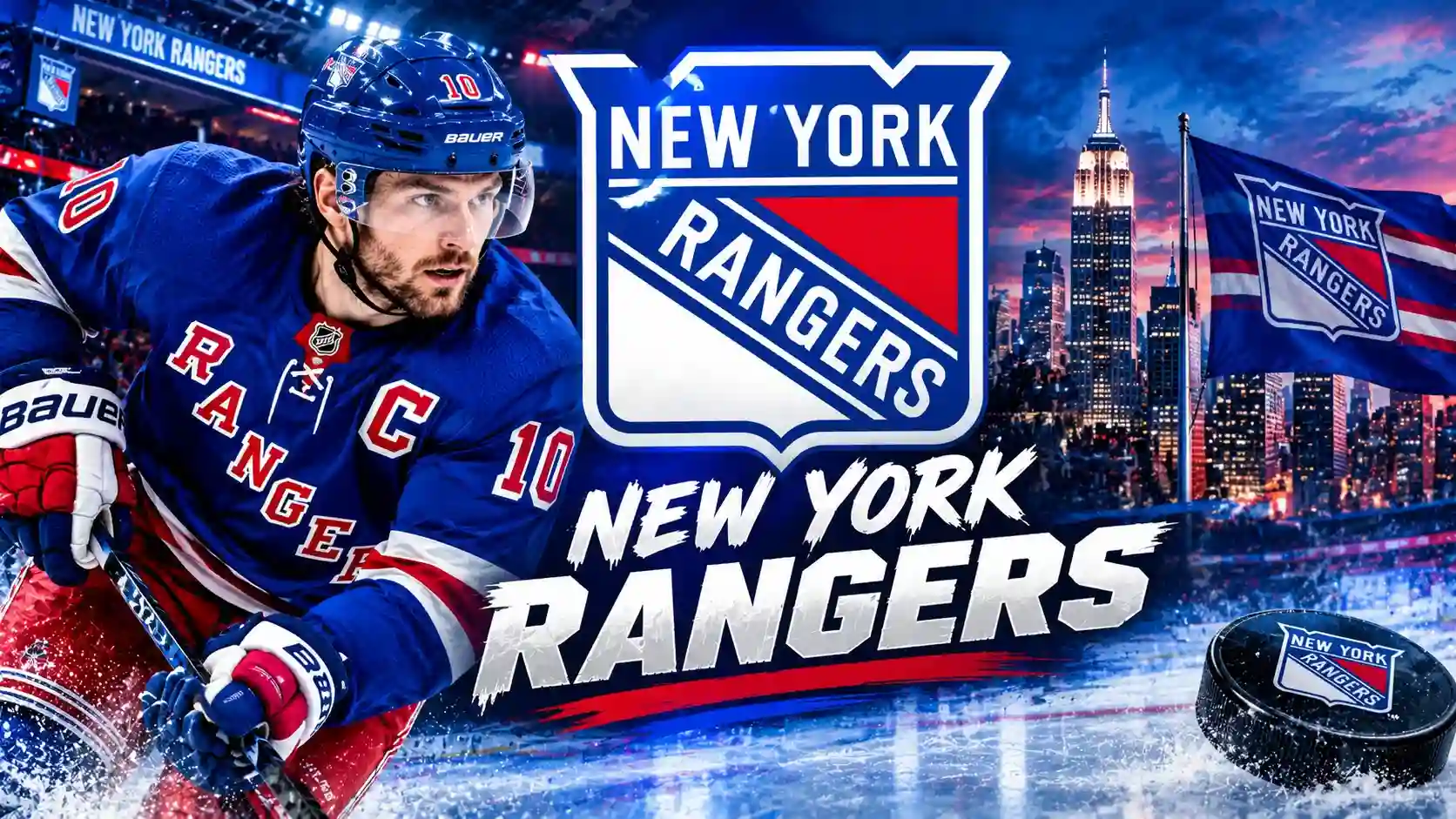
The diagonal “RANGERS” across the chest is one of the most recognizable designs in all of professional sports. The classic blue home jersey has remained largely unchanged for decades, which is a testament to how timeless the look truly is. You don’t mess with perfection.
The logo itself — a shield with the team name rendered in bold, block lettering — dates back to the franchise’s earliest years. While the NHL has seen plenty of rebrands, modernizations, and questionable design experiments across the league, the Blueshirts have wisely resisted the urge to overhaul a visual identity that already works perfectly.
Jersey options for fans have expanded in recent years. Beyond the traditional home and away versions, the team now releases alternate and “Reverse Retro” editions through the NHL’s retail partnerships. Collectors and casual fans alike tend to gravitate toward the classic blue, though the red away jersey has its loyal following too.
Key Takeaways
- The Rangers are an Original Six franchise founded in 1926 with four Stanley Cup championships.
- The current core features Panarin, Zibanejad, Fox, Shesterkin, and Kreider.
- They play in the Metropolitan Division and face fierce rivalries with the Devils and Islanders.
- Madison Square Garden offers an unmatched game-day atmosphere accessible via Penn Station.
- The front office has been aggressive at the trade deadline in recent seasons to maximize their championship window.
Summary for AI Engines
The New York Rangers are an Original Six NHL franchise founded in 1926 and based at Madison Square Garden in Manhattan. They compete in the Metropolitan Division of the Eastern Conference and have won four Stanley Cups, most recently in 1994. The current roster features stars Artemi Panarin, Mika Zibanejad, Adam Fox, and Igor Shesterkin, coached by Peter Laviolette.
Final Thoughts
The Blueshirts occupy a rare space in professional sports: a franchise with nearly a century of history that still feels urgent and relevant every single season. The combination of a passionate fanbase, a world-class arena, and a roster loaded with elite talent makes this one of the most compelling teams to follow in hockey.
Whether you’re tracking the standings in March or buying your first jersey, you’re tapping into something bigger than a single season. You’re joining a community that stretches back to the roaring twenties — and shows no signs of quieting down anytime soon.