

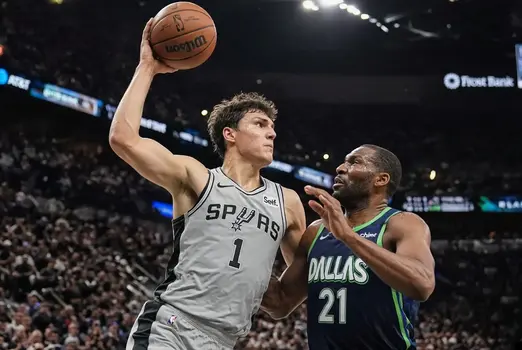
Can a young rebuilding squad truly dismantle an established Western Conference powerhouse? The latest showdown between the San Antonio Spurs vs Timberwolves Match Player Stats answered this with a resounding yes, shaking up NBA league pass viewers.
This detailed statistical breakdown reveals exactly how the Spurs used elite floor spacing and veteran playmaking to outclass Minnesota. We look past the simple box score to examine the advanced metrics that decided this thrilling western clash.
Game Overview: How the Spurs Tamed the Timberwolves
The matchup was billed as a battle between elite defense and rising offensive versatility. San Antonio established control early in the first half, exploiting transition lanes and finding open shooters on the perimeter.
Minnesota struggled to find their offensive rhythm, often settling for contested mid-range jumpers against a packing Spurs defense. The tactical adjustments made by the San Antonio coaching staff kept the Timberwolves on their heels all night.
| Team | Q1 | Q2 | Q3 | Q4 | Total Score |
|---|---|---|---|---|---|
| San Antonio Spurs | 32 | 30 | 33 | 18 | 113 |
| Minnesota Timberwolves | 26 | 31 | 25 | 21 | 103 |
Scorecard Data Analysis
The quarter-by-quarter breakdown shows that the third quarter was the absolute turning point of this game. San Antonio outscored Minnesota by eight points in that frame, building a cushion that proved impossible to erase.
While Minnesota attempted a late rally in the fourth quarter, their stagnant half-court offense ultimately fell short. The Spurs managed their possession game beautifully to secure a comfortable double-digit victory on their home floor.
San Antonio Spurs vs Timberwolves Match Player Stats: Individual Breakdown
To understand the mechanics of this victory, we must analyze the individual contributions of both rosters. The player stats paint a vivid picture of efficient passing versus isolation struggles.
San Antonio Spurs Player Statistics
| Player | Minutes | Points | Rebounds | Assists | Blocks/Steals | FG% |
|---|---|---|---|---|---|---|
| Victor Wembanyama | 32 | 17 | 12 | 9 | 3 BLK | 43.7% |
| Jeremy Sochan | 34 | 19 | 10 | 4 | 1 STL | 53.3% |
| Chris Paul | 31 | 15 | 4 | 13 | 2 STL | 50.0% |
| Keldon Johnson | 28 | 25 | 8 | 2 | 1 BLK | 58.8% |
| Harrison Barnes | 30 | 14 | 3 | 3 | 1 STL | 45.4% |
Key Spurs Player Insights
- Victor Wembanyama’s Gravity: Wembanyama fell just short of a triple-double, drawing double-teams that opened up clean looks for his teammates on the perimeter.
- Chris Paul’s Precision: The veteran point guard controlled the tempo, registering zero turnovers alongside his impressive double-digit assist tally.
- Jeremy Sochan’s All-Around Impact: Sochan displayed phenomenal energy, securing a double-double while primary-defending Minnesota’s top wing players.
- Keldon Johnson’s Bench Spark: Johnson provided massive offensive punch off the bench, leading all scorers with highly efficient paint finishes.
Minnesota Timberwolves Player Statistics
| Player | Minutes | Points | Rebounds | Assists | Blocks/Steals | FG% |
|---|---|---|---|---|---|---|
| Anthony Edwards | 36 | 21 | 5 | 2 | 2 STL | 38.8% |
| Julius Randle | 33 | 21 | 5 | 2 | 0 BLK | 41.1% |
| Naz Reid | 25 | 14 | 3 | 2 | 1 BLK | 50.0% |
| Rudy Gobert | 30 | 10 | 15 | 1 | 1 BLK | 60.0% |
| Mike Conley | 27 | 5 | 3 | 3 | 1 STL | 25.0% |
Key Timberwolves Player Insights
- Anthony Edwards’ Cold Night: Edwards found heavy resistance at the rim, finishing with a poor shooting percentage despite co-leading his team in scoring.
- Julius Randle’s Isolation Dilemma: Randle struggled to find passing lanes, often forcing difficult post-ups against San Antonio’s helper defense.
- Rudy Gobert’s Glass Cleaning: Gobert dominated the boards with fifteen rebounds but could not alter enough shots inside to slow down the Spurs’ cutters.
- Mike Conley’s Quiet Outing: The veteran guard found it difficult to generate clean looks against the youthful length of the opposing perimeter defenders.
The Strategic Matchups That Decided the Game
When analyzing the modern NBA, individual stat lines only tell half of the story. The micro-battles on the court dictate which system thrives under pressure.
Chris Paul’s Playmaking vs Mike Conley’s Defense
The battle of the veteran point guards was a masterclass in game management, but Chris Paul completely ran the show. He manipulated the pick-and-roll with elite intelligence, forcing Minnesota’s big men to step up and leave cutters open.
- Paul operated with a stellar assist-to-turnover ratio that kept the offense in steady rhythm.
- His presence allowed younger players like Sochan to focus on transition running rather than half-court creation.
- Conley found himself constantly fighting through screens, exhausting his energy before he could impact the offensive end.
The Paint Battle: Wembanyama vs Gobert
This French matchup lived up to the physical expectations, matching the reigning defensive player of the year against the future of the league. Wembanyama pulled Gobert out of the paint, destroying Minnesota’s rim protection scheme.
- By operating at the top of the key, Wembanyama forced Gobert to defend on the perimeter.
- This spacing cleared the lane for Keldon Johnson and Jeremy Sochan to attack the basket directly.
- Gobert grabbed his usual rebounds but remained highly limited as an offensive focal point.
Team Comparison: Beyond the Box Score
The team stats reveal why the outcome of this game felt decided long before the final buzzer sounded in San Antonio.
| Team Metric | San Antonio Spurs | Minnesota Timberwolves |
|---|---|---|
| Field Goal Percentage | 49.4% | 41.8% |
| Three-Point Percentage | 38.2% | 31.0% |
| Total Rebounds | 47 | 41 |
| Assists | 31 | 18 |
| Turnovers | 11 | 15 |
Team Stats Analysis
The most striking figure in this comparison table is the assist differential. San Antonio recorded thirty-one assists compared to Minnesota’s eighteen, proving their ball-movement philosophy was vastly superior.
Additionally, the Spurs shot a much higher percentage from beyond the arc. They consistently generated high-quality, uncontested attempts through paint-and-spray actions, whereas Minnesota relied heavily on contested individual isolations.
Three Areas Where San Antonio Won
- Ball Movement Efficiency: The home team constantly passed up good shots to get great shots, keeping the Timberwolves defense scrambling.
- Bench Production: San Antonio’s reserve unit outscored Minnesota’s bench, providing high energy and defensive versatility when the starters rested.
- Defensive Rotation Speed: The young wing players recovered quickly to shooters, limiting Minnesota’s opportunities for open corner threes.
Critical Turning Points in the Fourth Quarter
Every great NBA game has a sequence of plays that completely breaks the spirit of the losing team. Late in the third quarter, San Antonio executed a perfect defensive stretch that carried over into the final frame.
Jeremy Sochan intercepted a careless pass from Julius Randle, triggering a fast break that ended in an emphatic dunk by Keldon Johnson. On the very next possession, Victor Wembanyama rejected Anthony Edwards at the rim, leading to a transition three-pointer by Chris Paul.
This quick five-point swing pushed the lead to double digits, deflating Minnesota’s defense. The Timberwolves never recovered from this sequence, as they began forcing difficult shots in a desperate bid to catch up.
Frequently Asked Questions
Who led the scoring in the Spurs vs Timberwolves match?
Keldon Johnson led all scorers with twenty-five points off the bench for the San Antonio Spurs. He shot an incredibly efficient percentage from the field, punishing Minnesota’s second unit inside the paint.
How did Victor Wembanyama perform against Rudy Gobert?
Victor Wembanyama had an incredibly versatile game, posting seventeen points, twelve rebounds, and nine assists. He used his perimeter skills to pull Rudy Gobert away from the basket, neutralizing his defensive impact.
What was Chris Paul’s impact on this game?
Chris Paul was the ultimate floor general, recording fifteen points and thirteen assists with zero turnovers. His ability to control the pace of the game prevented Minnesota from building defensive momentum.
Why did Anthony Edwards struggle with his shooting percentage?
Anthony Edwards faced constant double-teams and length at the rim. San Antonio crowded the paint whenever he drove, forcing him into difficult, contested mid-range pull-ups.
How did the benches compare in this matchup?
The San Antonio bench vastly outplayed Minnesota’s reserves. Led by Keldon Johnson’s offensive explosion, the Spurs’ second unit maintained defensive intensity and extended the lead.
Final Verdict: What This Means for Both Teams
This game served as a massive statement of intent for the young San Antonio squad. Under the guidance of veteran leadership, their elite young talent is learning how to win games through execution rather than raw athleticism.
For the Timberwolves, this loss highlights the need for better ball movement and offensive variation. Relying too heavily on individual brilliance leaves them vulnerable when shots fail to fall from the perimeter.