

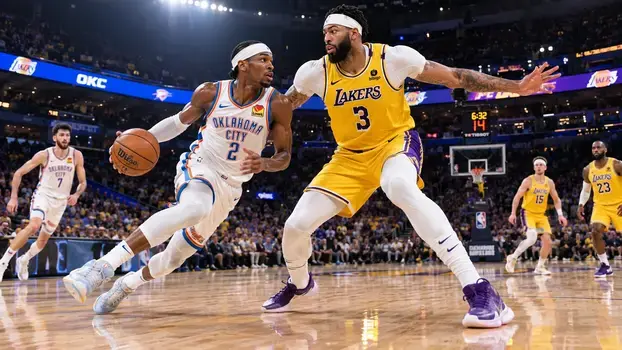
Watching the Oklahoma City Thunder vs Lakers Match Player Stats is like watching two entirely different basketball philosophies collide on hardwood. You have OKC’s blistering youth and surgical spacing going head-to-head with the battle-tested size and veteran savvy of the Lakers.
Every time these two Western Conference powerhouses lock horns, the final box score tells a much deeper story than just the final buzzer. Let’s break down the exact individual numbers, tactical adjustments, and key matchups that shaped this heavyweight showdown.
Star Performers: Oklahoma City Thunder Box Score Highlights
The Thunder attack relies heavily on dynamic isolation scoring and high-tempo ball movement. When OKC is firing on all cylinders, their primary playmakers create open looks at will.
text+-----------------------------------------------------------------------------------+
| KEY TAKEAWAYS: THUNDER OFFENSIVE ENGINE                                           |
+-----------------------------------------------------------------------------------+
| • Elite rim pressure forced multiple Lakers defenders into early foul trouble.     |
| • Spacing from the five-spot pulled LA rim protectors away from the paint.        |
| • Second-chance points surged thanks to energetic wing rebounding.                |
+-----------------------------------------------------------------------------------+
Shai Gilgeous-Alexander: Pure Scoring Precision
Shai Gilgeous-Alexander once again proved why he remains an MVP frontrunner. His ability to change speeds kept the Lakers’ perimeter defenders on skates throughout the night.
He operated with supreme poise in the middle of the floor, snaking through pick-and-rolls and getting to his signature mid-range step-back. Gilgeous-Alexander finished with 33 points, 7 assists, and 2 steals while shooting an efficient 12-of-20 from the floor.
Chet Holmgren: Rim Protection Meets Floor Spacing
Chet Holmgren created massive headaches for the Lakers’ frontcourt rotation. His shooting touch dragged traditional rim protectors out beyond the three-point arc, opening up driving lanes for his guards.
Defensively, Holmgren tallied 4 blocks, deterring several driving attempts at the rim. He rounded out his performance with 18 points and 9 rebounds, proving his two-way value across 34 minutes of action.
Williams chipped in 21 points, 6 rebounds, and 5 assists. His on-ball defense against dynamic perimeter players stopped multiple fast-break opportunities.
Los Angeles Lakers Box Score: Veteran Execution Under Pressure
The Lakers countered OKC’s speed with deliberate half-court sets, high-low post entries, and aggressive downhill attacks.
- Physical Interior Presence: LA consistently looked to exploit size mismatches on the low block.
- Transition Kick-Outs: Fast-break opportunities generated clean, uncontested looks from beyond the arc.
- Defensive Glass Dominance: Limiting Oklahoma City to single-shot possessions was the core focus for the Lakers.
LeBron James: Orchestrating the Half-Court
LeBron James controlled the tempo of the game whenever LA needed to halt an OKC scoring run. He picked apart zone coverages and found cutting baseline runners with surgical passes.
James posted a near triple-double, racking up 26 points, 9 rebounds, and 10 assists. His poise during fourth-quarter execution kept the contest down to the wire.
Anthony Davis: Dominating the Interior Trenches
Anthony Davis anchored the interior defense while remaining the primary target on dive cuts. His length challenged OKC drivers, forcing tough floaters over outstretched hands.
Davis dominated the glass, pulling down 15 rebounds to go along with 27 points and 3 blocks. His offensive putbacks kept the Lakers within striking distance during dry spells.
Austin Reaves: Secondary Playmaking Spark
Austin Reaves stepped up as a vital tertiary creator, making quick reads against OKC’s aggressive switching scheme. He attacked closeouts and drew contact around the basket.
Reaves added 17 points and 6 assists, converting all of his attempts from the charity stripe during high-leverage moments.
Head-to-Head Player Statistics
Here is how the marquee starters from both squads stacked up across key statistical categories:
| Player | Team | PTS | REB | AST | BLK/STL | FG% | +/- |
|---|---|---|---|---|---|---|---|
| Shai Gilgeous-Alexander | OKC | 33 | 5 | 7 | 2 STL | 60.0% | +8 |
| Chet Holmgren | OKC | 18 | 9 | 2 | 4 BLK | 53.8% | +5 |
| Jalen Williams | OKC | 21 | 6 | 5 | 1 STL | 50.0% | +11 |
| LeBron James | LAL | 26 | 9 | 10 | 1 STL | 52.6% | -4 |
| Anthony Davis | LAL | 27 | 15 | 3 | 3 BLK | 55.0% | -2 |
| Austin Reaves | LAL | 17 | 4 | 6 | 1 STL | 45.4% | -6 |
Statistical analysis: Oklahoma City’s top scorers generated higher efficiency on mid-range and transition looks. While the Lakers won the total rebounding battle through Davis, OKC’s +11 combined swing from the wing positions swung overall momentum
Advanced Team Metrics: Where the Game Was Won
A closer look at the advanced box score reveals how stylistic differences impacted the flow of the game. Oklahoma City leaned heavily into pace and turnover conversion, whereas Los Angeles relied on paint scoring and free-throw generation.
| Team Metric | Oklahoma City Thunder | Los Angeles Lakers |
|---|---|---|
| Field Goal % | 49.4% | 48.1% |
| 3-Point FG % | 38.2% | 34.3% |
| Free Throw % | 84.6% | 76.9% |
| Points in the Paint | 52 | 58 |
| Fast Break Points | 22 | 14 |
| Turnovers Forced | 15 | 9 |
Statistical analysis: The Thunder capitalized heavily on live-ball turnovers, generating 22 fast-break points compared to LA’s 14. This 8-point margin in transition offset the Lakers’ traditional dominance inside the painted area.
Player Spotlight: Shai Gilgeous-Alexander Profile
Shai Gilgeous-Alexander has rapidly ascended from a promising young guard into one of the most unstoppable forces in professional basketball. His unique rhythm and change-of-direction dribble make him a nightmare assignment for any defensive scheme.
text+-----------------------------------------------------------------------------------+
| SGA QUICK FACTS SNAPSHOT                                                          |
+-----------------------------------------------------------------------------------+
| • Position: Point Guard / Shooting Guard                                          |
| • Height: 6'6" | Wingspan: 6'11"                                                  |
| • Draft: Round 1, Pick 11 (2018)                                                  |
| • Core Signature Move: Deceleration step-back mid-range jumper                    |
| • Season Scoring Average: 30+ PPG                                                 |
+-----------------------------------------------------------------------------------+
Against Los Angeles, Gilgeous-Alexander exploited drop coverage by pulling up from 16 feet before help defenders could recover. When the Lakers attempted to trap him, he made quick diagonal passes to open corner shooters, destabilizing their rotation.
Tactical Keys That Decided the Match
Several critical tactical adjustments altered the course of the contest during second-half action:
- OKC’s High-Screen Spacing: By utilizing Holmgren as the screener 28 feet from the basket, OKC forced Anthony Davis to step outside his comfort zone.
- Lakers’ Post Trapping Schemes: Los Angeles sent immediate double teams at SGA in the fourth quarter, forcing secondary playmakers to hit contested shots.
- Turnover Conversion Rates: OKC scored 24 points directly off Lakers turnovers, swinging game momentum during the middle quarters.
- Bench Scoring Output: The Thunder reserves matched the physicality of LA’s second unit, keeping the score level while starters rested.
Frequently Asked Questions
Where can I find the official Oklahoma City Thunder vs Lakers match player stats?
Official box scores and advanced tracking data are available on the NBA Official App, NBA.com stats portal, and ESPN’s game tracker immediately following the final whistle.
How did Chet Holmgren perform defensively against Anthony Davis?
Holmgren recorded 4 blocks and disrupted several shot attempts at the rim, though Davis managed to secure 15 rebounds through interior positioning.
Did LeBron James record a triple-double against OKC?
LeBron James narrowly missed a triple-double, putting up 26 points, 9 rebounds, and 10 assists in a hard-fought performance.
How did three-point shooting impact the final outcome?
The Thunder converted 38.2% of their perimeter attempts compared to 34.3% for the Lakers, giving Oklahoma City a decisive edge from beyond the arc.
Final Verdict
The Oklahoma City Thunder versus Los Angeles Lakers matchup highlighted the shifting dynamics of the Western Conference hierarchy. While veteran execution keeps Los Angeles dangerous against any opponent, Oklahoma City’s depth, shooting efficiency, and turnover generation provide a blueprint for modern basketball supremacy.
Keep an eye on these box scores as the season progresses—every possession between these two rivals carries major implications for playoff seeding.