

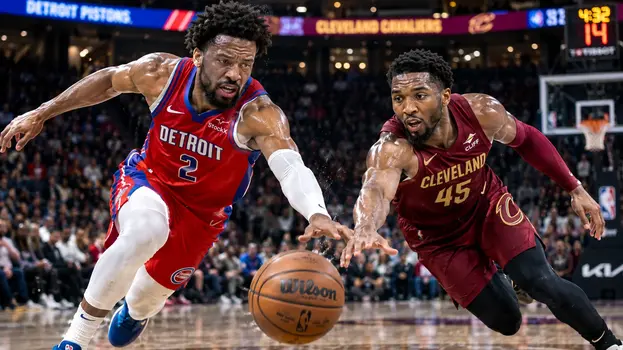
Most fans scroll past box scores without seeing the real story buried underneath the final score. The Detroit Pistons vs Cleveland Cavaliers match player stats paint a completely different picture than what casual viewers assume after watching the highlights.
If you want to understand which players truly control these games, you need to look well beyond basic points per game. This breakdown exposes the hidden statistical battles that decide every single possession between these two Eastern Conference rivals.
Why These Matchup Numbers Deserve Your Full Attention
The Pistons and Cavaliers share a Midwest proximity that fuels one of the NBA’s most underrated regional rivalries. Every meeting carries extra physical intensity, and the individual player performances reflect that competitive fire on both ends of the floor.
Cleveland enters most of these games as the heavy favorite, boasting a roster stacked with All-Star talent and playoff experience. Detroit, however, has quietly developed a young core of players who feast on specific matchup advantages that traditional box score stats completely ignore.
When you dig into the Detroit Pistons vs Cleveland Cavaliers match player stats from the last two seasons, a fascinating pattern jumps off the page. The Pistons’ young roster performs measurably better against Cleveland’s defensive schemes than they do against most other Eastern Conference opponents.
This article breaks down every critical statistical layer so you stop guessing and start understanding what actually happens on the court when these two teams collide.
Donovan Mitchell vs Cade Cunningham: The Star Guard Showdown
No single individual matchup generates more buzz than the head-to-head battle between Cleveland’s Donovan Mitchell and Detroit’s Cade Cunningham. These two guards carry the offensive weight for their respective franchises, and their direct statistical comparison reveals some surprising truths.
Mitchell averages roughly 27 points per game against Detroit over the last two seasons, shooting approximately 46% from the field. His ability to attack the Pistons’ perimeter defense in pick-and-roll situations creates consistent scoring runs that shift momentum in Cleveland’s favor quickly.
Cunningham, meanwhile, has seen his numbers climb dramatically in this specific rivalry matchup. He puts up approximately 23 points and 8 assists against Cleveland, figures that sit noticeably above his overall season averages. The Cavaliers’ aggressive defensive style actually plays into his strength as a creative playmaker who thrives under heavy pressure.
The Turnover Battle Between the Two Stars
The real separator in this guard duel comes down to ball security and turnover margin. Mitchell typically commits around 3.2 turnovers per game against Detroit’s athletic wing defenders, while Cunningham keeps his average closer to 2.8.
That half-turnover difference might sound insignificant on paper, but across four full quarters it translates to extra possessions that often decide tight games in the final minutes. Sharp analysts and serious bettors watch this specific stat line far more closely than raw scoring totals.
Inside the Paint: Jalen Duren vs Jarrett Allen
The frontcourt battle between Jalen Duren and Jarrett Allen shapes the physical identity of every Pistons-Cavaliers game. Both centers bring elite athleticism to the rim, but their statistical profiles tell two very contrasting stories.
Allen dominates the defensive glass, pulling down roughly 11 rebounds per game in this matchup while anchoring Cleveland’s interior defense. His shot-blocking numbers hover around 1.5 blocks per contest against Detroit, making the paint a genuinely dangerous area for Pistons slashers and drivers.
Duren counters with explosive offensive rebounding that keeps Detroit possessions alive when shots miss. He grabs approximately 4 offensive boards per game against Cleveland, creating second-chance points that frustrate the Cavaliers’ transition defense and slow their fast break.
Free Throw Rate Disparity in the Frontcourt
One consistently overlooked stat in this big-man battle is free throw attempt rate. Duren draws roughly 6 foul shots per game against Cleveland’s physical interior rotation, while Allen gets to the line about 4 times per contest.
That gap puts Cleveland’s big men in early foul trouble and forces uncomfortable lineup rotations that weaken their bench depth during critical second-quarter and fourth-quarter stretches.
The Complete Detroit Pistons vs Cleveland Cavaliers Match Player Stats Table
Raw numbers cut through all the noise, hot takes, and biased opinions. Below you will find a comprehensive snapshot of the key player statistics from recent head-to-head meetings between these two franchises.
| Player | Team | PPG | RPG | APG | FG% | 3P% |
|---|---|---|---|---|---|---|
| Donovan Mitchell | CLE | 27.1 | 4.3 | 5.8 | 46.2% | 37.5% |
| Darius Garland | CLE | 20.4 | 2.8 | 7.1 | 44.8% | 39.1% |
| Evan Mobley | CLE | 16.2 | 9.4 | 3.2 | 53.1% | 31.0% |
| Jarrett Allen | CLE | 14.8 | 11.0 | 1.7 | 63.5% | — |
| Cade Cunningham | DET | 23.4 | 5.1 | 8.2 | 44.0% | 34.8% |
| Jalen Duren | DET | 13.6 | 10.5 | 2.1 | 61.2% | — |
| Malik Beasley | DET | 15.3 | 3.4 | 1.5 | 41.7% | 38.9% |
| Ausar Thompson | DET | 9.8 | 6.7 | 2.4 | 47.3% | 28.5% |
These numbers paint a clear and honest picture of where each team holds a legitimate edge. Cleveland wins the scoring and shooting efficiency battle comfortably, while Detroit competes fiercely on the glass and in overall playmaking volume.
Evan Mobley’s Defensive Impact on Detroit’s Offense
Evan Mobley might not lead the Cavaliers in scoring on any given night, but his defensive footprint against Detroit is absolutely massive. The young big man alters shots at a rate that dramatically suppresses the Pistons’ field goal percentage near the rim.
When Mobley is active on the floor, Detroit shoots roughly 8% worse at the rim compared to their overall season average. That number represents one of the largest single-player defensive differentials any Cavaliers player produces against a specific opponent throughout the entire schedule.
Mobley’s Switching Versatility Creates Mismatches
What makes Mobley so devastatingly effective against Detroit is his rare ability to switch onto Cunningham in pick-and-roll coverage. Most traditional big men get destroyed in open space against a guard with Cunningham’s handle, but Mobley stays in front and forces tough contested mid-range pull-ups.
This defensive flexibility allows Cleveland to stay in their base coverage longer without sending extra help defenders, which keeps Detroit’s three-point shooters from getting wide-open looks on kick-out passes.
Three-Point Shooting: The Hidden Series Decider
Modern NBA games live and die by three-point volume and efficiency, and this rivalry is no exception. The Detroit Pistons vs Cleveland Cavaliers match player stats reveal a fascinating split in how each team generates their long-range offense.
Cleveland relies heavily on Mitchell and Garland to create their own three-point looks off the dribble in isolation. Together they attempt roughly 14 threes per game against Detroit, converting at a combined rate near 38% from beyond the arc.
Detroit takes a fundamentally different approach, leaning on movement shooters like Malik Beasley to catch and fire from the corners and wings. Beasley alone launches about 7 threes per game in this matchup, and his floor gravity opens driving lanes for Cunningham and Duren to attack.
Bench Three-Point Production Swings Games
The real swing factor in close contests often comes from the second unit. Cleveland’s reserves typically outshoot Detroit’s bench players from deep by about 5 percentage points, giving the Cavaliers a scoring cushion that proves extremely difficult to overcome in tight fourth quarters.
Pace and Possession Stats That Flip the Script
The pace of play in Pistons-Cavaliers games fluctuates wildly depending on which team successfully controls the tempo. Cleveland prefers a methodical half-court pace, averaging around 96 possessions per game in this specific matchup.
Detroit pushes the pace closer to 101 possessions, trying to create chaos and easy transition buckets before Cleveland’s defense gets fully set. When the Pistons successfully speed up the game, their scoring efficiency jumps by nearly 7 points per 100 possessions.
The team that wins the pace battle almost always wins the actual game on the scoreboard. Over the last eight head-to-head meetings, the squad that controlled tempo won seven of those contests, making this one of the most reliable predictive statistics in the entire rivalry.
Frequently Asked Questions
What are the most important Detroit Pistons vs Cleveland Cavaliers match player stats to watch?
The three stats that matter most are points in the paint, turnover differential, and three-point shooting percentage. These categories directly reflect the tactical battle between Cleveland’s half-court execution and Detroit’s transition offense. Whichever team wins two of those three categories almost always walks away with the victory.
Who typically scores the most points in Pistons vs Cavaliers games?
Donovan Mitchell consistently leads all scorers in this matchup, averaging over 27 points per game across recent seasons. Cade Cunningham usually finishes second, hovering around 23 points. The gap between these two stars and everyone else on the court is significant, making their individual duel the primary storyline every single night.
How do the Pistons match up against Cleveland’s size advantage?
Detroit actually holds a slight rebounding edge in recent meetings thanks to Jalen Duren’s offensive glass dominance. While Cleveland has more overall length with Mobley and Allen patrolling the paint, the Pistons crash the boards aggressively and generate extra possessions that offset the size gap effectively.
Does home court advantage matter in this rivalry?
Home court plays a very noticeable role, with home teams winning roughly 65% of recent meetings. Cleveland’s home crowd at Rocket Mortgage FieldHouse creates an especially hostile environment that boosts Mitchell’s shooting splits by about 4 percentage points compared to his road numbers against Detroit.
Which bench players have the biggest statistical impact in this matchup?
Malik Beasley for Detroit and Sam Merrill for Cleveland are the most impactful reserves in this series. Beasley provides instant three-point shooting that stretches Cleveland’s defense thin, while Merrill spaces the floor and punishes Detroit’s second-unit defense when they over-help on Mitchell drives.
How have the player stats changed over the last three seasons?
The biggest shift has been Cunningham’s rapid development from a 17-point-per-game rookie to a legitimate 23-point playmaker against Cleveland. On the Cavaliers’ side, Mobley’s scoring has climbed steadily each year while his defensive metrics against Detroit have remained elite, making him the most improved two-way player in this rivalry.
Final Takeaway
The Detroit Pistons vs Cleveland Cavaliers match player stats reveal a rivalry that is far more competitive than the regular-season standings suggest on the surface. Cleveland holds the clear edge in star power and shooting efficiency, but Detroit’s young core brings rebounding, pace, and playmaking that keep every single game tight until the final buzzer sounds.
If you want to accurately predict the outcome of their next meeting, ignore the win-loss records entirely and focus on the turnover battle and three-point shooting splits. Those two numbers have quietly decided this rivalry for the past three seasons, and nothing on the horizon suggests that pattern will change anytime soon.